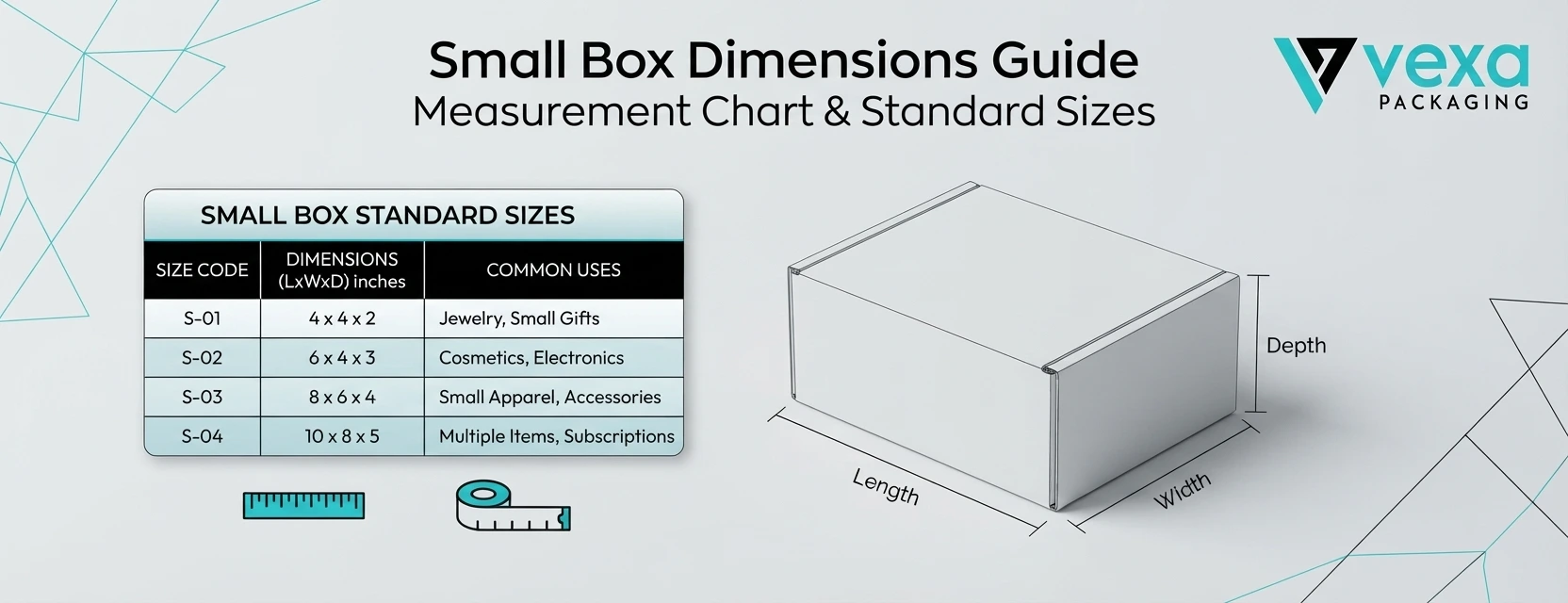
The choice of the correct box size seems small but it will impact safety of your product, shipping costs and the perception of your brand to your customers. That is why small box dimensions should be given more consideration as compared to others. This guide will take you through the sizes of the standard sizes, rules of the carriers and how to measure a box properly before you order otherwise you will either pay to fill the unused space or break what is inside.
They are the length, width and height measures that are utilized to categorize a box as small and they are normally abbreviated as L x W x H. Small boxes that fall within these ranges are mostly:
Boxes that belong to this category are good in retailing products, cosmetics, small electronics and items that are mailed. Anything that is less than this size tends to be classified as a mini or micro box whereas anything bigger passes to the middle world. Being aware of the size of small box options in advance would save you guessing when you place an order and would allow you to judge between quotes offered by different suppliers on a level playing field.
Not all small boxes are alike. The typical sizes of the small box vary according to the sort of packaging you require, so before you ask a quote, it is good to know what sort of style best suits your product.
Small Mailer Boxes (Roll End Tuck Top):
Small Mailer Boxes are used when it comes to shipping smaller retail products to customers. Typical sizes include 6″ × 4″ × 2″, 8″ × 6″ × 2″ and 9″ × 6″ × 3″. They can be assembled easily without the use of tapes because they are designed to fold shut.
Small Product Paperboard Boxes:
Boxes that are 3 x 3 x 3 or 2 1/2 x 2 1/2 x 4 inches are common among brands that sell retail items or cosmetics. These sizes work well for lipsticks or accessories.
Small Corrugated Shipping Boxes:
When shipping is required that is more durable the most frequent sizes are 8 x 6 x 4 and 10 x 6 x 4. Corrugated material provides crush resistance to products that are passed by several delivery centers.
Rigid Small Gift Boxes:
Gift boxes often come in 5″ × 5″ × 2″ or 4″ × 4″ × 2″ sizes to give a more premium feel. Stiff paper makes them look more solid and high-end than folding boxes.
These small box sizes will give you a starting point but it is the exact product that will determine which one fits best.
Each shipping carrier has its own rules regarding small boxes and determining the size of your package to fit within those limits can save you a lot of money in shipping rather than provoke an oversize fee.
| Carrier | Box Type | Dimensions |
|---|---|---|
| USPS | Small Flat Rate Box | 8.625″ × 5.375″ × 1.625″ |
| UPS | Small Box | 13″ × 11″ × 2″ |
| FedEx | Small Box | 10.875″ × 1.5″ × 12.375″ |
A carrier official small box will take you out of additional measurements and in most cases you are charged a flat rate of shipping which is predictable. When your product can fit conveniently in one of these, you will most likely save more than when getting a tailor-made box to make a single delivery.
This is one of the first reasons why many people, who are first-time buyers, make a mistake: the size printed on a box listing is the outside size, but not the inside size. This is a big thing to anyone who orders a small box, which is customized to fit a particular product, as what seems to be a big box on paper may be rather too tight when you take into consideration the thickness of the material.
Paperboard thickness (characteristic of between 12pt to 24pt SBS) occupies the interior space. The amount of room lost in corrugated boxes varies with the type of flute with E-flute consuming less space than B-flute. As a rule of thumb, leave a 1/8″ to 1/4″ buffer between your product and the box wall when measuring custom boxes. This is one of the easiest steps to skip and when the product is damaged or loose inside the packaging, the reason is often overlooked, but once you understand to check, it becomes difficult to forget.
The majority of carriers have begun to charge on dimensional (DIM) weight, rather than on actual weight. It implies that a big, empty container will be more expensive to deliver than a heavier object which fits snugly into a smaller container.
The right size of the small box will save you the cost of wasting space. Packaging that is bigger than your product will increase your DIM weight calculation, even though the product might weigh very little. One of the simplest ways businesses can reduce their shipping expenditures without altering their carriers or service levels is switching to an appropriately sized box, instead of a generic large box.
When you are getting a custom box rather than a standard size, getting it measured right the first time will save you the expense of reprints. The formula is:
“ Length × Width × Depth (L × W × D) ”
Width is the short side, Length is the longest side that you are facing and depth is the height of the box that is vertical. Always pack the product before adding in any insert that you are going to use, which can be foam padding, partitions made of paperboard or even bubble wrap. These inserts actually occupy space within the box and therefore including them in the initial calculations ensures that the end size of your small box is not too large or too small.
After you have your product measurements, including the space between, a small buffer to material thickness and then submit the specifications to your manufacturer. It is an additional step that eliminates delays and minimizes the possibility of having to repeat the production run.
The first step is to get the right size of your small box and save yourself the time, money and frustration in future. Shipping via USPS, FedEx, UPS or do-you-own-custom-design, the correct size safeguards your product and helps you control expenses. The above standard sizes can be used as a guide and then customized according to the requirements of your product.
1. What size box do I need with my product?
Measure the length, width and height of your product and allow extra area in case of padding or inserts. This is the minimum size of the box you need in order to make a successful and safe fit.
2. What is a small box to ship?
Shipping a small box usually doesn’t exceed 12 inches in length and remains less than a few pounds but all depends on the carrier.
3.What is the smallest size of the USPS priority mail box?
It contains flat rate boxes that measure 8.625 × 5.375 × 1.625 inches and can be used with priority shipping.
The choice of the correct box size seems small but it will impact safety of your product, shipping costs and the perception of your brand to your customers. That is...

There is hardly any other package that is more hard working than a cereal box. It must advertise itself within less than three seconds and be able to amuse a...
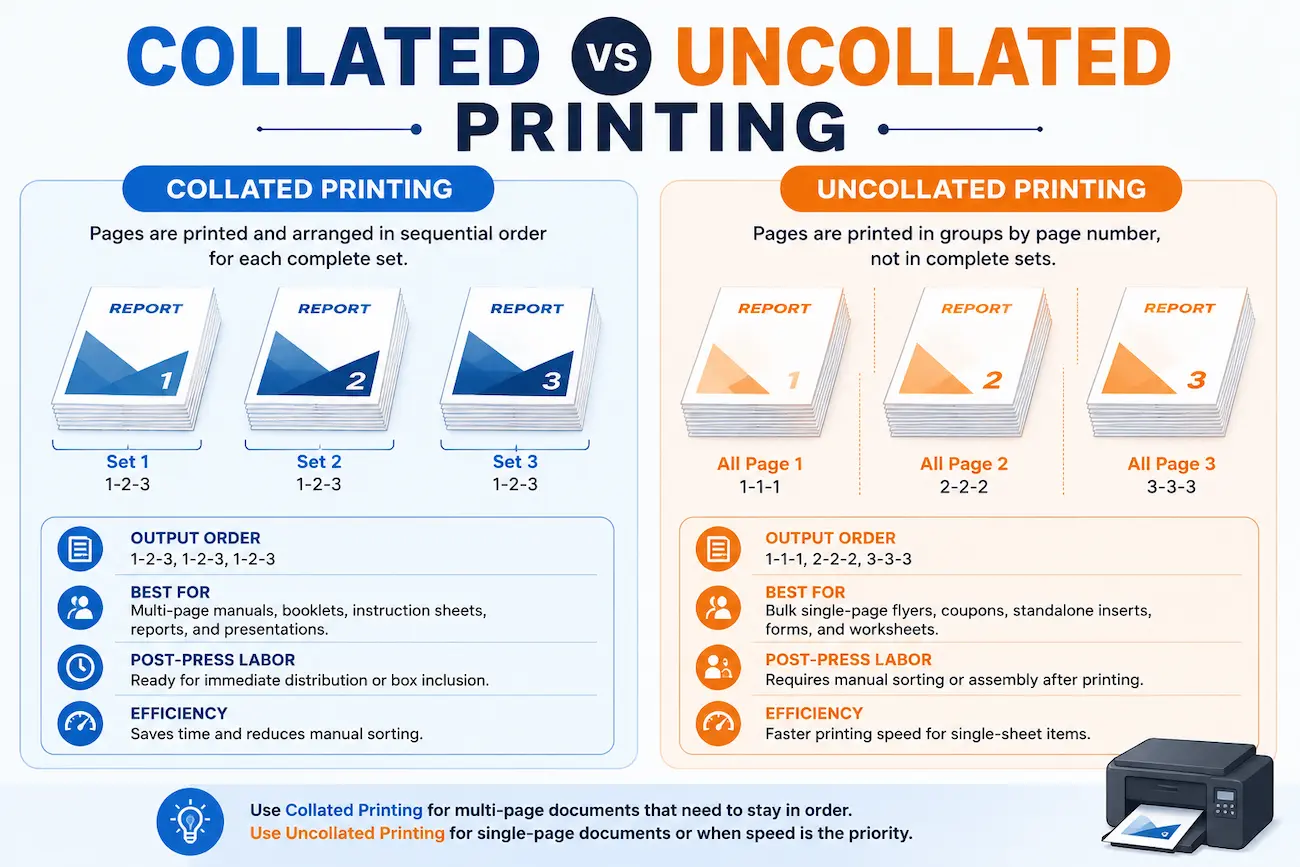
Imagine that you just printed 500 pages of a 50-page training manual and are now manually picking up the sets at the copier. This is the reason collate printing was...

Pick up a bowl and sit down, for we are going on a colorful, chaotic and wonderful journey through the history of cereal mascots. These cartoon characters make the mundane...