
Typically, orders are received within 10-15 business days after the design is approved. If you have an urgent launch, Rush production will be available and the exact time will be confirmed after reviewing your specifications.
What happens if the circuit board is fragile and it arrives cracked because the box wasn’t seaworthy? Each dent equals lost revenue and an angry customer. We make electronic packaging boxes that are custom-fitted for your electronics and that have padded corners, so your electronics can arrive safe and sound every time.
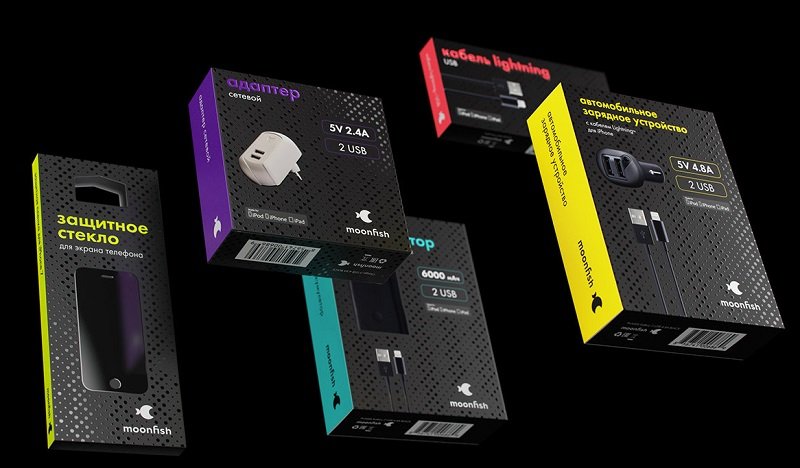
Get a free quote now; don't suffer from damaged products anymore. Once your packaging designers have responded, it's within 1 business day.
This packaging involves items that protect circuit boards, sensors and complete electronic devices against impact, static and moisture during handling and shipping. It’s not just a container. It’s a choice that you make while working on the product to see if it is working or broken when it reaches the customer.
The global electronic packaging market will reach $38.01 billion by 2034, expanding at a CAGR of 5.1% from $25.52 billion in 2026. This growth is easy to explain: Sizes are decreasing and devices are becoming more complex, so the protection of the box is becoming more and more important. We see each box as part of the product. The device is protected by a good design. A good design will also safeguard your brand reputation.
Electronic boxes provide an internal layer of soft material such as foam inserts, corrugated dividers or anti-static film to cushion the impact and prevent components from moving while in transit. Standard cardboard usually isn’t robust enough to withstand forklift drops or to survive on conveyor belts or stacked pallets.
The 43% of electronics returns that are defective or damaged are much higher than any other category of return. That damage is largely due to poor packaging and not poor product. A well-constructed electronic box eliminates the problem right at the source, prior to it arriving at a customer’s doorstep.
Each device will be unique, have a different fragility level and shape, so there is not a “one-size-fits-all” box for all devices. Custom electronics boxes are made to the precise dimensions of your product and are usually die-cut foam or molded pulp trays that secure the product in place and prevent internal movement.
We begin by looking at one of our sample products, then prototype the drop test and finally, only if the box can handle stress and vibration, conduct a production run. That is, you will receive your custom boxes validated and not estimated.
When retailers change to “right-sized” packaging, designed with ample cushioning, they can cut their damage rate by 40-60% just by doing so. Our custom electronic packaging boxes are made with double-wall corrugated, anti-static liners and reinforced corners, which will endure the actual shipping load rather than just the printable stress.
Your branding is also printed right onto the box and becomes a marketing asset that customers see as soon as they open the box.
In the design of electronics packaging, the first question that should be asked is how will this box be handled? We design the whole shipping process right from the warehouse rack to the courier sorting to the last stage of delivery and know what materials to choose so that the shipping process is practical rather than theoretical.
All our electronics packaging designs are drop, vibration and compression-tested to ISTA standards, so you know your product will be durable before placing an order for production.
Some brands carry a different product, quantity or price and our electronics packaging solutions range from prototype to production orders. Options include:
Whatever your catalog is, we match the tier of packaging with the risk level of the product inside.
Electronics packaging that’s optimal is a combination of three things: protection, cost and sustainability. We use double-wall and triple-wall corrugated to provide structural strength, closed-cell foam to provide shock absorption and anti-static polyethylene for parts that are susceptible to electrostatic discharge.
We also have a range of recyclable and curbside-compostable packaging options as more buyers are looking for the best electronics packaging to keep the planet in mind, too.
Not all electronic packaging companies test their designs before shipping them to you. The packaging generally outscores a typical supplier in these ways:
| Factor | Standard Supplier | Vexa Packaging |
|---|---|---|
| Design testing | Rarely drop-tested | Drop, vibration and compression tested |
| Turnaround | 3–5 weeks | 10–15 business days |
| Customization | Limited stock sizes | Fully custom, die-cut to your product |
| Materials | Standard cardboard only | Corrugated, foam, anti-static, recyclable |
| Support | Email only | Dedicated packaging engineer |
Collaborating with the appropriate electronic packaging manufacturers at an early stage in the product lifecycle saves redesigning products after launch.
The main purpose of electronic product packaging is to absorb the shock while protecting your device. When the shock of impact occurs, the cushioning materials compress and take up the impact energy, thereby diffusing the impact energy into the material without going directly to the circuit board.
According to Red Stag Fulfillment, about 20% of e-commerce returns are caused by products being damaged in shipping. One of the only solutions to reduce that number is through properly designed product packaging.
Got a question? Take a look at our FAQs about the custom packaging process.
Typically, orders are received within 10-15 business days after the design is approved. If you have an urgent launch, Rush production will be available and the exact time will be confirmed after reviewing your specifications.
Can work with existing dimensions or create new ones. A lot of clients will leave the outer dimensions of their box the same and simply change the padding inside to address a damage issue.
Yes. We are a supplier of corrugated, recyclable, curbside compostable mailers and molded pulp trays for brands who don't want additional plastic waste.
The minimum quantity ranges between materials and complexity, we can accommodate both small lots and production quantities. Please provide your desired quantity and we will quote for it directly.
All designs are drop, vibration and compression-tested before their approval for production. You're seeing real performance data, not a sample photo.