Find the length, width and height of the book, and then add about ¼-inch to each dimension for padding. This will keep the book snug without forcing it into or out of.
A book should be wrapped up as memorable as its story. Whether you’re sending out novels, box sets or subscription reads, book boxes can make all the difference in the world, before the first page of the book is even opened. Each fold, finish and print element either supports or undermines trust.
Don't accept non-customized mailers. Inquire and find out about the unboxing possibilities of your book boxes tailored to your brand and watch how it gets you repeat orders!
This is a breakdown of all materials, sizes and finishes offered for each order.
| Materials | Chipboard, corrugated board, SBS paperboard, kraft |
| Standard Sizes | Fits mass-market, trade, and hardcover trim sizes |
| Custom Sizing | Built to your exact book dimensions on request |
| Printing Methods | Offset printing, digital printing, UV printing |
| Finishing Options | Foil stamping, embossing, soft-touch or gloss lamination |
| Add-ons | Ribbon closures, magnetic locks, die-cut windows, and inserts |
| Minimum Order | Starts as low as 100-250 units for digital runs |
| Turnaround Time | 10-20 business days, rush options available |
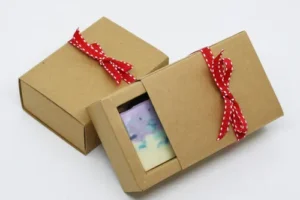
Rigid or folding cases designed to enclose, protect and display books for shipping, gift giving or retailing. Publishers, authors and subscription services depend on them to help create crisp pages and sharp corners to the doorstep. Book packaging does so much more than protect against damage. It features a simple cover with brand colors and some finishing touches that make for a fun to read experience to be photographed and shared.
Cartons that have no brand information on them tend to be dented and are not a reflection of your brand. Custom book boxes are perfectly shaped to fit the title and will minimise damage during transit and ensure each reader has the right reveal time.
In 2026, the global “custom packaging” industry is valued at nearly 50 billion dollars, and growth is still in the 6% /year range and is a significant component of each packaging order with boxes accounting for nearly 38%. Brands that don’t engage in book boxes are missing that growth curve.
Good book packaging boxes have three elements: robustness, accuracy of fit and print quality that will hold up to handling. Corners are protected from crushing with chipboard or corrugated cores, covers are stamped with foil and matte laminated to ensure the gallery’s appearance.
Paper and paperboard already represent nearly 47% of the custom packaging industry, as they print easily and can be recycled, while maintaining shape under stacking pressure. It is this same reliability that is the reason why publishers will use it for long-lasting results.
Typically, production begins with a structural die-line designed around your book’s trim and then progresses through the material choices, offset or digital printing and finishing treatments (embossing, spot UV, etc.). It is then assembled and tested for quality before packing for customers
Indie authors will find digital printing an affordable option for small print runs and offset printing will be the more cost-effective option for larger publisher runs. Either way, the custom printed book boxes are going to be custom and are going to get a sharp, consistent color.
Whether it’s subscription box services, independent publishers, bookstores, educational suppliers or gift retailers, these businesses rely on custom book box packaging to efficiently get products moving and promote their titles. Signed editions are now being ordered in small quantities even by self-published authors to raise their profiles.
Cosmetics and food manufacturers already see that 36% of shoppers are more inclined to purchase when packaging is personalized, and publishers are taking note. Book boxes are now used not only for shipping books but also for marketing purposes.
| Box Style | Best For | Material | Typical Turnaround |
|---|---|---|---|
| Rigid Book Box | Collector’s editions, gift sets | Chipboard + wrap | 12–18 business days |
| Folding Carton | Everyday paperback shipping | Paperboard | 8–14 business days |
| Slipcase Box | Box sets, signed bundles | Rigid board | 14–20 business days |
Folding cartons help to stay within the budget for everyday paperback shipments and rigid options are ideal for collector’s editions and gift sets. Before ordering, look at this table to save time and reprint costs.
The pricing will vary according to material thickness, print complexity, option for finishing and quantity of orders. Generally, custom runs are higher in price per piece but bulk runs are much lower as setup costs are distributed across more units.
Asking for a sample before the production order is still the best way to ensure quality and avoid any unexpected cost overruns.
Begin with the actual size of your book, taking into consideration protection requirements, budget and turnaround time. You will reinforce a children’s book differently than a signed hardcover collector’s set.
Sustainability matters too. Inquire with your supplier about recyclable inventory and soy inks – eco-friendly consumers are starting to make their decision on the box before they make their decision on the content. You’ll save your books and reputation if you make a careful selection here.
Looking for custom packaging? Make it a breeze by following our four easy steps - soon you’ll be on your way to meeting all your packaging needs!
Choose from our vast selection of packaging solutions and customize it with our wide range of options to create your dream packaging.
After customizing your packaging, simply add it to quote and submit quotation to be reviewed by one of our packaging specialists.
Get expert consultation on your quotation to to save on costs, streamline efficiency and reduce environmental impacts.
Once everything is ready for production, have us manage your entire production and shipping! Just sit and wait for your order!
Got a question? Take a look at our FAQs about the custom packaging process.
Find the length, width and height of the book, and then add about ¼-inch to each dimension for padding. This will keep the book snug without forcing it into or out of.
Yes, digital printing is suitable for small print runs of as few as a few hundred copies. Affordable single order printing for indie authors without the need to run a full print of their books.
A majority of suppliers now have recycled paperboard and water-based inks available that can meet sustainability goals. Print quality and sharpness remain the same as standard print materials.
Typically, 10 to 20 business days for turnaround, subject to finishing options and order size. Sometimes production is also available for rush for a cost.
Rigid or corrugated boxes that are the correct size will significantly lessen shock and protect corners from damage compared to oversized generic mailers. A tight fit prevents the book from moving while being transported.